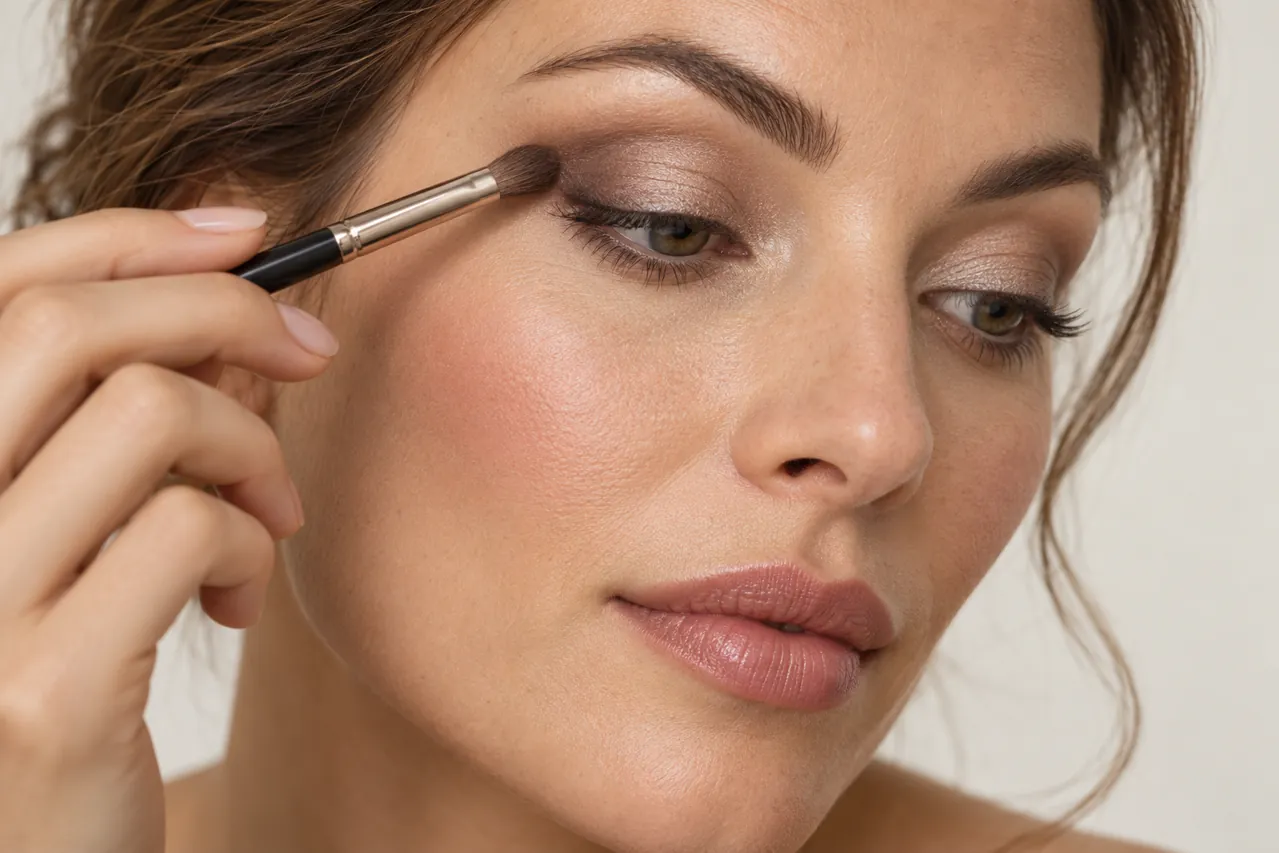
Choose Three Shades and Two Brushes
Start with three shades from one colour family: a soft beige, a medium taupe and a deeper brown, for example. The light shade should blend into the skin around your eyes rather than look dramatically paler. Keep a flat eyeshadow brush and a clean blending brush to hand, and add the deepest colour sparingly.
Tap excess powder off the brush before it touches the lid. A heavily loaded brush can leave a concentrated patch at the first point of contact. Applying a little at a time makes it easier to judge the edge and gradually build the depth you want.
Work from Light to Dark in a Small Area
Sweep the light shade over the upper lid and soften it into your skin tone. Place the medium shade towards the outer lid and blend inward. Begin with a small area, then open your eyes to see what remains visible before deciding whether to extend it. There is no need to keep adding colour towards the brow.
Use short strokes to place a little of the deepest shade close to the outer upper lash line. If you want some shimmer, pat a small amount onto the centre of the lid and blend it into the surrounding colour. A matte-only version is equally useful for a first practice.
Check the Transitions with Your Eyes Open
Use a clean blending brush to soften the boundary between two shades while keeping the darkest colour in its intended area. If blending starts to spread the colour too far, pause and look at the result with your eyes naturally open rather than adding more pale shadow over it.
Step back from the mirror and compare the effect with your eyes both open and closed. Practising with the light and medium shades first, then introducing the darker shade another day, is a useful learning sequence. The aim is to gain repeatable control over placement and edges.