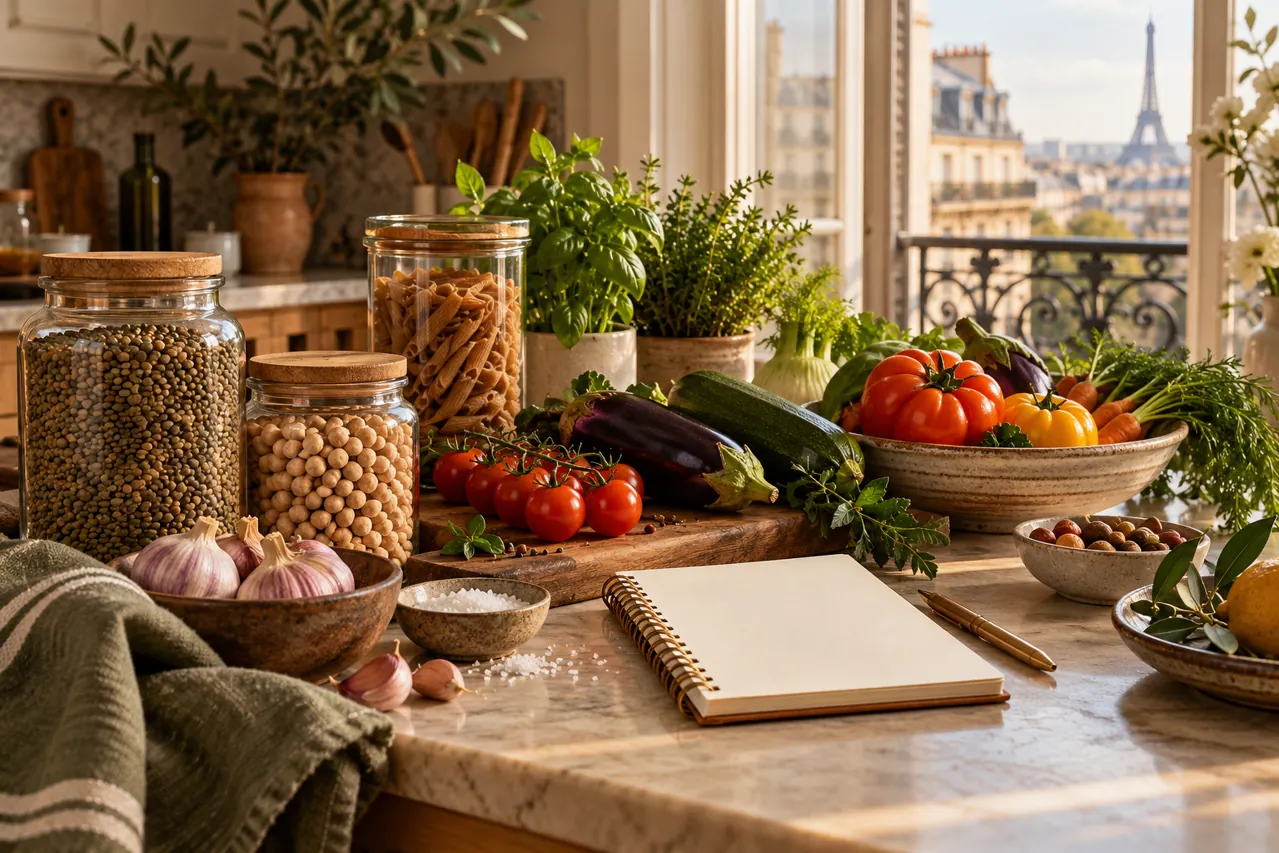
Plan meals before comparing prices
Manger Bouger includes pulses and wholegrain staples among its suggestions for economical food shopping. They offer practical starting points for a list, but the cost of a particular meal still depends on the quantities, brands and other ingredients you choose.
Choose a few dishes that share ingredients before leaving home. A packet opened for one dinner is easier to use fully when another planned meal includes the remainder. Check storage space and what you can realistically cook during the week.
Choose preparation time as well as price
The public-health guide notes that lentils and split peas do not require soaking, while some other dried pulses do. Precooked jars or cans are another option when preparation time is limited. Follow the directions on the particular product rather than assuming one method suits every pulse.
Compare the amount you will actually use, the unit price and the preparation required. A larger pack is not automatically the better purchase if it does not fit your cupboard, meal plan or available cooking time.
Build a Paris shopping trip around your list
Check prices where you normally shop rather than assuming a market, specialist store or supermarket will always be cheaper. Write the same quantities beside comparable items; this makes a second shop’s price meaningful instead of comparing unlike packages.
Keep the receipt and note which ingredients were left over. Use those observations for the next list. This gives you a household-specific way to adjust spending without promising that a fixed euro amount can cover everyone’s weekly food.