Compare like with like
French public-health guidance presents Nutri-Score as a comparison tool. It is useful for comparing alternatives within a food category or products eaten on the same occasion, rather than choosing one unrelated food over another solely because its letter is higher.
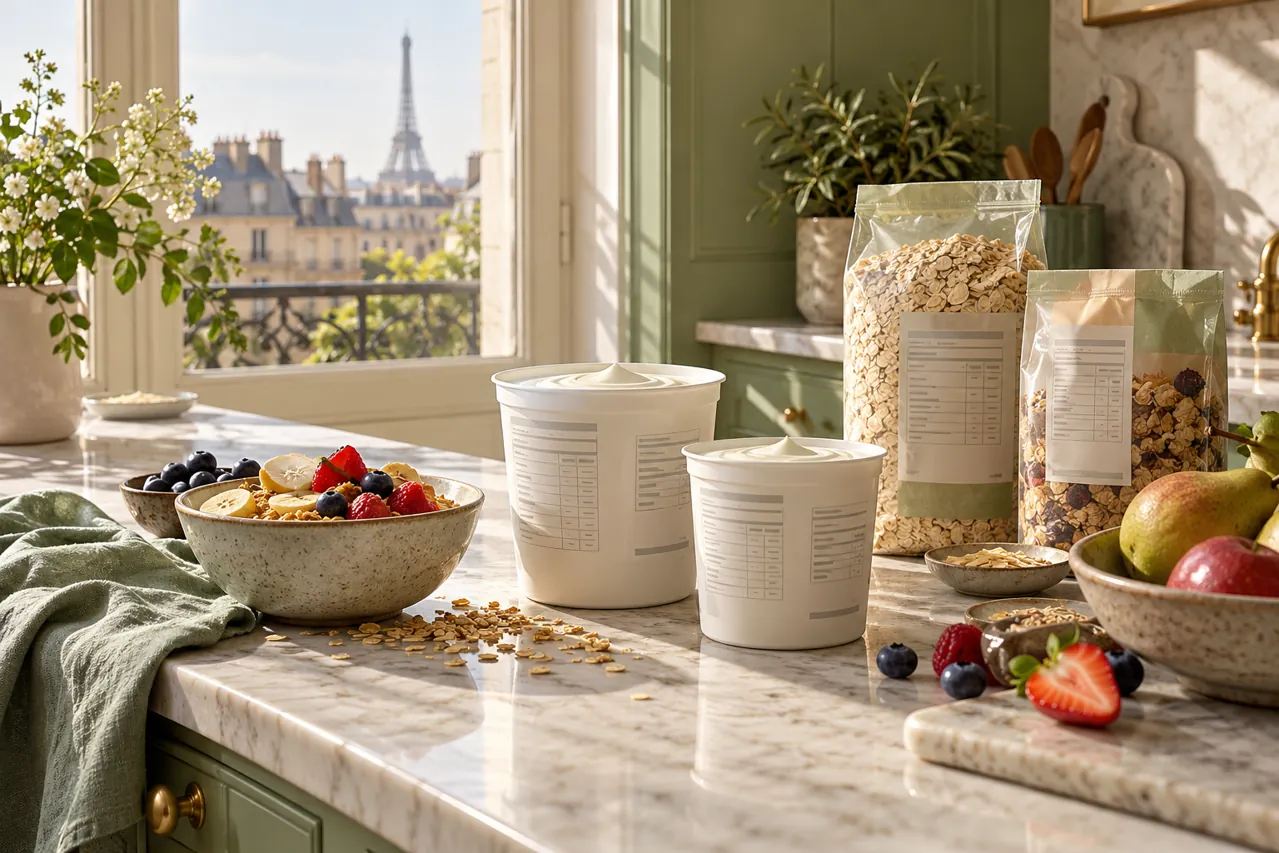
For a breakfast purchase, you could place two cereals or two yogurts beside each other. Keep the intended use constant while comparing the label, so the decision answers what you actually need for that meal.
Read the rest of the pack
Manger Bouger’s current guide explains that the best available score differs between some categories. For oils, for example, B is the best possible score. An A-only shopping rule would therefore misunderstand how the label works.
After checking the letter, read the ingredient list, nutritional information and any allergen declaration relevant to you. Note the pack size as well: a large package and a small one may look similarly priced until you compare their unit prices.
Make a repeatable shopping list
Write down the food category you need before choosing a brand. A short list of breakfast items, lunch ingredients and planned dinners gives each comparison a purpose and helps you avoid buying several alternatives for the same meal.
Keep the product name and the reason for your choice if you want to compare it again next time. The score is one part of that decision; taste, dietary requirements, quantity and budget still need to fit the person shopping.